
Care for your tabo and bucket with a practical routine
Use the instructions supplied with your products to plan washing, rinsing, drying, storage, and condition checks. A useful routine should suit the actual items and the way your household uses them.
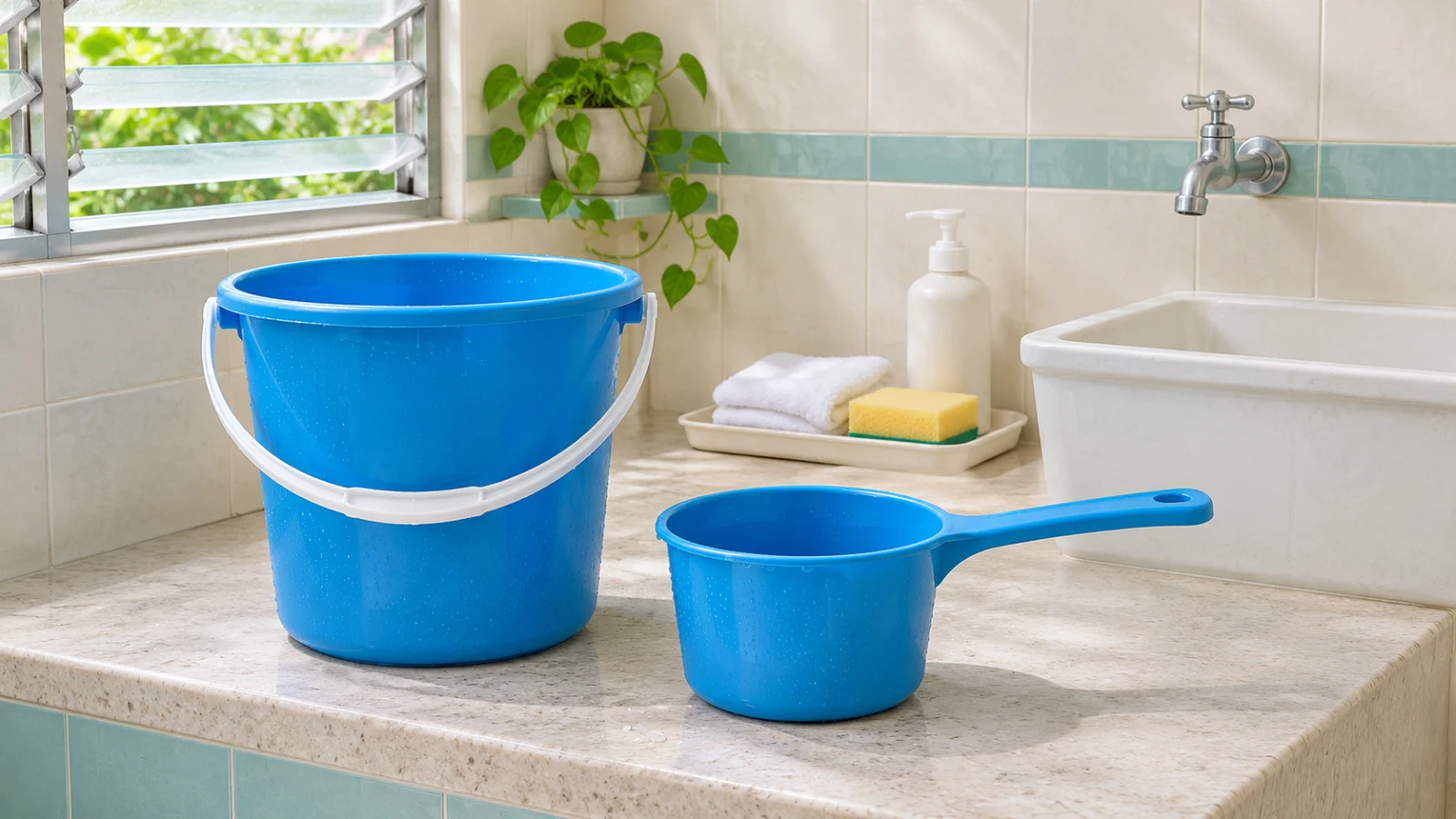
Check instructions before choosing a method
A tabo and bucket may look straightforward, but their materials, finishes, and components can differ. Before cleaning, check the packaging, label, or manufacturer’s guidance for the items you own. Look for instructions about suitable cleaners, water temperature, tools, and drying.
Do not assume that a method used for one container is suitable for another. A dishwasher cycle, abrasive pad, or strong cleaning product may be inappropriate for a particular surface or component. Appearance alone does not establish compatibility.
If instructions are unavailable, ask the manufacturer or seller about the intended cleaning method. Keep any information provided so that future care does not depend on remembering an uncertain detail. The materials and construction guide explains the difference between a material marking and a complete care instruction.
Prepare enough space to work comfortably
Move nearby toiletries and other loose items before starting. Choose a place where you can handle the tabo and bucket without balancing them on a narrow edge or obstructing the bathroom door. Make sure you can reach the surfaces you intend to clean.
Gather only the tools and products that are appropriate for the task. Read cleaning-product labels, including any instructions about protective equipment, ventilation, application, and rinsing. Follow the stated directions rather than estimating a stronger mixture.
Keep equipment used for bathroom cleaning identifiable and separate from items intended for other purposes. In a shared household, make the distinction clear to everyone who uses or stores the supplies.
Wash and rinse the accessible surfaces
Follow the recommended method for washing the inside and outside of each item. Pay attention to the rim, underside, handle, and any areas where residue is visible. A quick pass over the easiest surface may leave other parts untouched.
Use a suitable cleaning tool rather than forcing an abrasive implement into a difficult corner. If a design has an opening, join, or decorative feature that is hard to access, consult the product instructions before attempting to dismantle it.
Rinse as directed by the cleaner and product instructions. Inspect the surfaces again after washing so you can identify remaining residue or damage that was less apparent before. Washing is an opportunity to check condition as well as appearance.
Cleaning and disinfecting are different processes. This guide does not prescribe a universal disinfectant, dilution, or contact time. If disinfection is needed, use guidance appropriate to the circumstances and follow the relevant product labels.
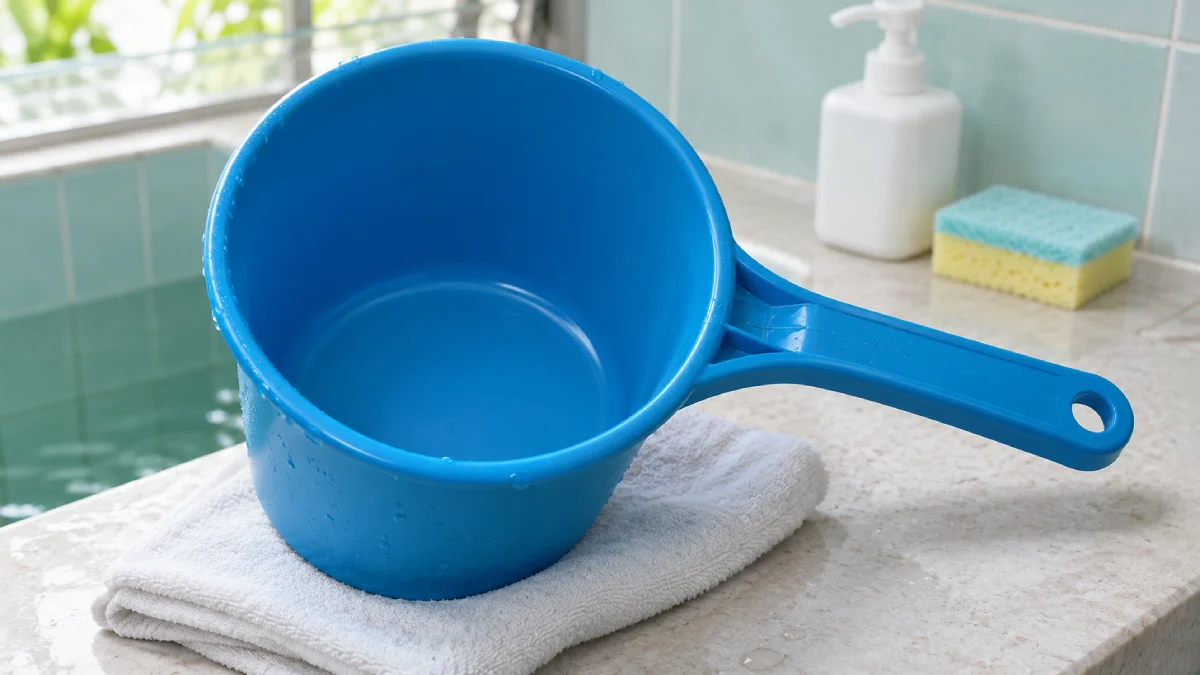
Plan for draining, drying, and storage
After cleaning, follow the manufacturer’s guidance for draining and drying. Consider whether the chosen position allows water to remain trapped in a recess or beneath the item. Move it as appropriate rather than assuming every resting position works equally well.
Return the tabo and bucket to a suitable place that does not obstruct movement. Keep them away from products or conditions the manufacturer says to avoid. Do not store an item beside a heat source simply to speed up drying unless that method is explicitly supported.
Review the area underneath and around the storage position. If it is awkward to reach during cleaning, simplify the arrangement. A practical storage location should be accessible for both everyday use and maintenance.
The storage and placement guide covers bucket access, handle clearance, shelves, and other layout considerations.
Inspect the parts that carry the load
Check the handle and its connection to the container body during routine care. Look for visible cracking, separation, looseness, or a change that makes the item feel less secure to hold.
Inspect the rim and base as well. Sharp damage, leaks, or a distorted resting surface can affect ordinary use even when most of the container still appears intact. Do not continue using an item solely because the damage seems small.
There is no single replacement interval that applies to every tabo or bucket. Follow any manufacturer guidance and assess the actual condition. If the item no longer holds water or cannot be handled securely, take it out of use and consider replacement.
Ask the maker or seller about an unexpected change rather than attempting a repair that may be unsuitable. Keep the item separate while you clarify the next step, so another household member does not unknowingly return it to use.
A repeatable care checklist
Use this sequence as an organising aid alongside the instructions for your products. It does not replace a cleaner’s label or establish a specialised treatment.
| Stage | What to review |
|---|---|
| Read | Check the item’s care instructions and the cleaning-product label. |
| Prepare | Clear enough working space and gather suitable supplies. |
| Wash | Address the inner and outer surfaces, rim, handle, and underside. |
| Rinse | Follow the stated instructions and check for residue. |
| Inspect | Look for leaks, sharp damage, and changes around the handle connection. |
| Dry and store | Use an appropriate position and keep access routes clear. |
Ask when compatibility is unclear
If you cannot confirm whether a temperature, cleaner, or tool is suitable, contact the manufacturer or seller. Include the product model or material description and explain the method you are considering.
General household guidance cannot resolve every situation, especially when contamination, a specialised material, or individual health needs are involved. Seek advice appropriate to the circumstances instead of improvising a treatment.