
Make everyday bathroom routines easier to manage
Plan a practical arrangement for your tabo, bucket, toiletries, and cleaning equipment. Begin with the space you have and the needs of the people who use it.
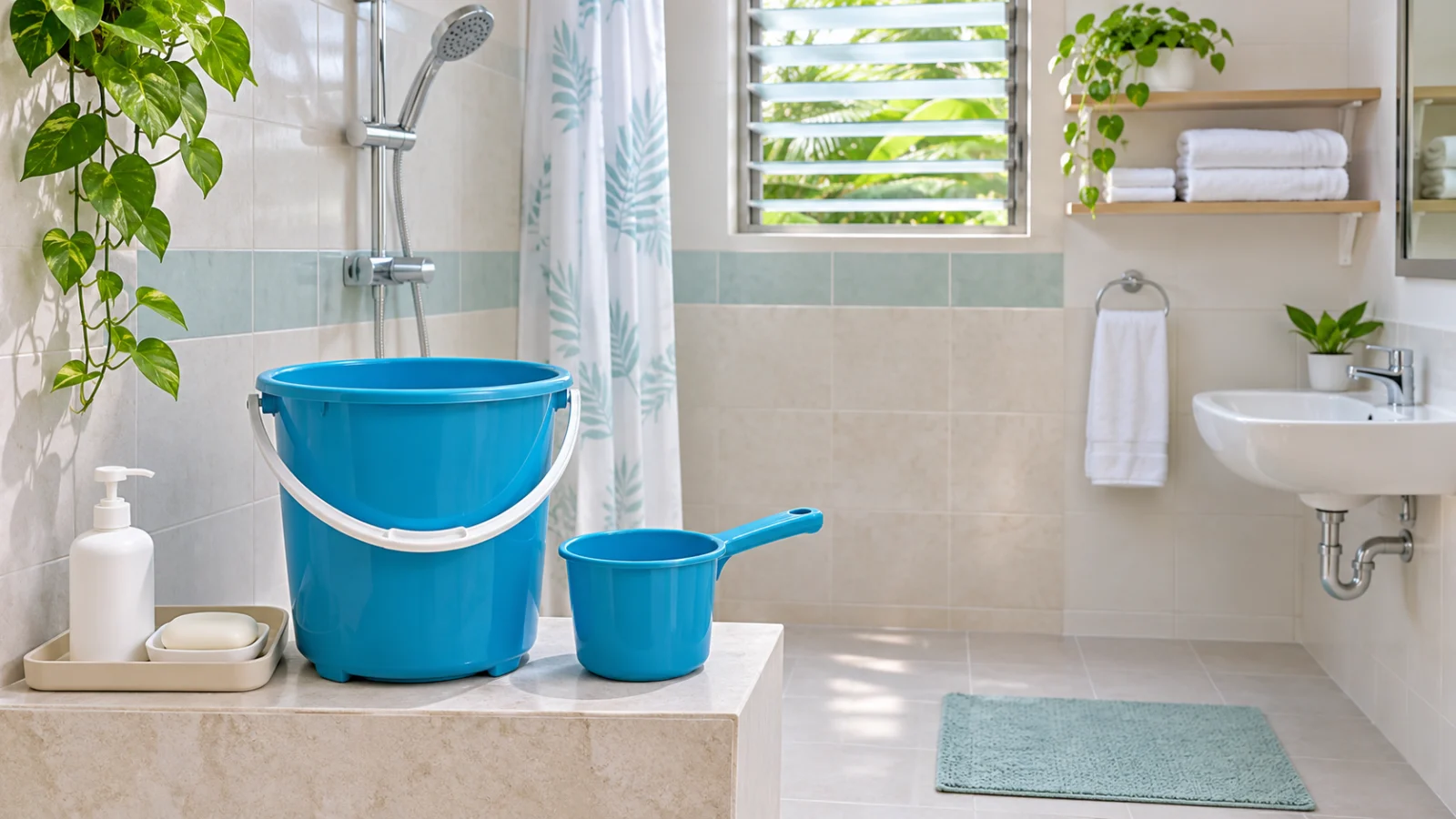
Look at the layout before adding more items
A useful bathroom setup begins with the available space, not a shopping list. Notice where the door opens, how people move between fixtures, and which areas receive splashes during ordinary use. These observations help you decide where a bucket, tabo, and other essentials can be placed without becoming obstacles.
Consider the room at different times of day. An arrangement that looks clear when no one is using it may become crowded when towels, toiletries, or cleaning equipment are brought inside. Leave room for those ordinary activities rather than filling every available corner.
Before buying an organiser, identify the problem it needs to solve. You might need a more accessible place for a dipper, somewhere suitable for dry towels, or fewer loose items around a basin. A targeted change is easier to evaluate than adding several accessories at once.
Treat the tabo and bucket as a working pair
Check that the dipper fits the bucket opening and can be lifted without catching its handle on a nearby wall or fitting. Consider the reach needed when the water level is lower, as well as when the container is full.
Choose a position that supports comfortable access and leaves a clear route through the room. Do not place a container where opening the door will strike it or where a projecting handle is easily caught during movement.
The surrounding surface should also allow you to move and clean around the bucket. A narrow gap that collects water or debris may be difficult to maintain. Check the base, rim, and handles regularly, and follow any instructions supplied with the individual items.
If the tabo itself feels awkward, review the tabo buying guide before changing the entire setup. Handle shape, filled weight, and storage position may each contribute to the difficulty.
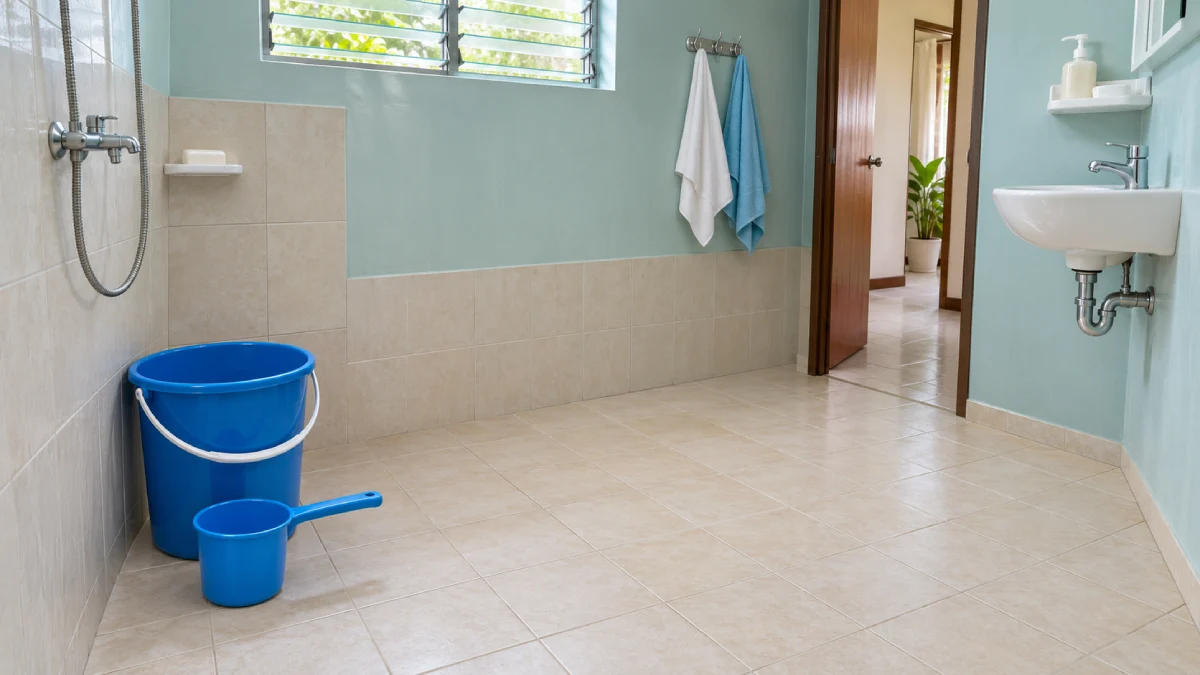
Give toiletries and towels a suitable place
Keep frequently used toiletries within reasonable reach of the place where they are needed. Avoid balancing containers on narrow edges or arranging them where they repeatedly fall into a basin or walking route.
Separate items that need to remain dry from areas that regularly receive splashes. Consider how a towel will hang or rest after use, and whether the arrangement allows it to dry rather than remain tightly bundled. Follow the care instructions for the textile and any storage accessory.
A small tray or organiser can help group loose items, but it also needs cleaning. Check whether water collects underneath or inside it. Choose a design that can be moved and cleaned without requiring you to dismantle the entire arrangement.
Keep cleaning equipment separate and identifiable
Give cleaning tools a defined storage position. A dipper or container used for cleaning should not be confused with an item intended for another purpose. In a shared bathroom, explain the distinction instead of assuming that everyone recognises it.
Store cleaning products according to their labels and keep them in their original labelled containers. Follow the stated storage conditions and restrictions on access. Do not transfer a cleaner into an unlabelled drinks bottle or a container that could be mistaken for something else.
Think about the cleaning route as well as the storage position. You should be able to reach the floor around containers and remove an organiser when needed. A setup that makes routine cleaning difficult is worth simplifying.
For the tabo and bucket themselves, consult the cleaning and care guide and the instructions for the products you own.
Check organisers, hooks, and shelves before use
Before attaching a hook or shelf, check the manufacturer’s instructions for the wall surface, fixing method, and permitted load. An accessory designed for a smooth surface may not be suitable for a textured or damaged wall.
Account for the contents of an item, not just its empty weight. A storage fitting should not be assumed suitable for a filled bucket simply because it can hold the empty container. Use only arrangements supported by the relevant product instructions.
Inspect fittings periodically for movement or visible deterioration. If you are renting, check what alterations are permitted before drilling or applying a permanent fixing. When a suitable installation is unclear, a simpler arrangement may be more practical.
A room-by-room planning checklist
Use these questions to review an existing bathroom before buying additional essentials. The aim is to identify a specific need and make a change that is easy to maintain.
| Area | Questions to consider |
|---|---|
| Access | Can the door open fully, and can people move between fixtures without shifting containers? |
| Tabo and bucket | Do the items fit together, and is the dipper manageable to reach, lift, and return? |
| Toiletries | Are frequently used items accessible without being balanced on narrow edges? |
| Towels | Is there a suitable place to keep dry towels and allow used ones to dry? |
| Cleaning | Can you move equipment and reach the surrounding surfaces for cleaning? |
| Storage fittings | Are hooks and shelves installed and used within their stated requirements? |
Add only what improves the routine
A practical bathroom does not need every available accessory. Keep the items that serve a clear purpose and reconsider those that obstruct access, collect unused supplies, or make cleaning more difficult.
After changing a layout, observe how it works during normal use. Check whether the tabo is returned to its intended position, whether splashes collect around an organiser, and whether the walking route remains clear.
General guidance cannot determine the right arrangement for every person or building. Follow product instructions and obtain appropriate help for installations or individual access needs that go beyond ordinary household organisation.