
Understand the details behind an everyday water dipper
Look at product information, surface condition, handle construction, and care instructions together. Appearance alone cannot tell you everything about a tabo’s material or suitable uses.
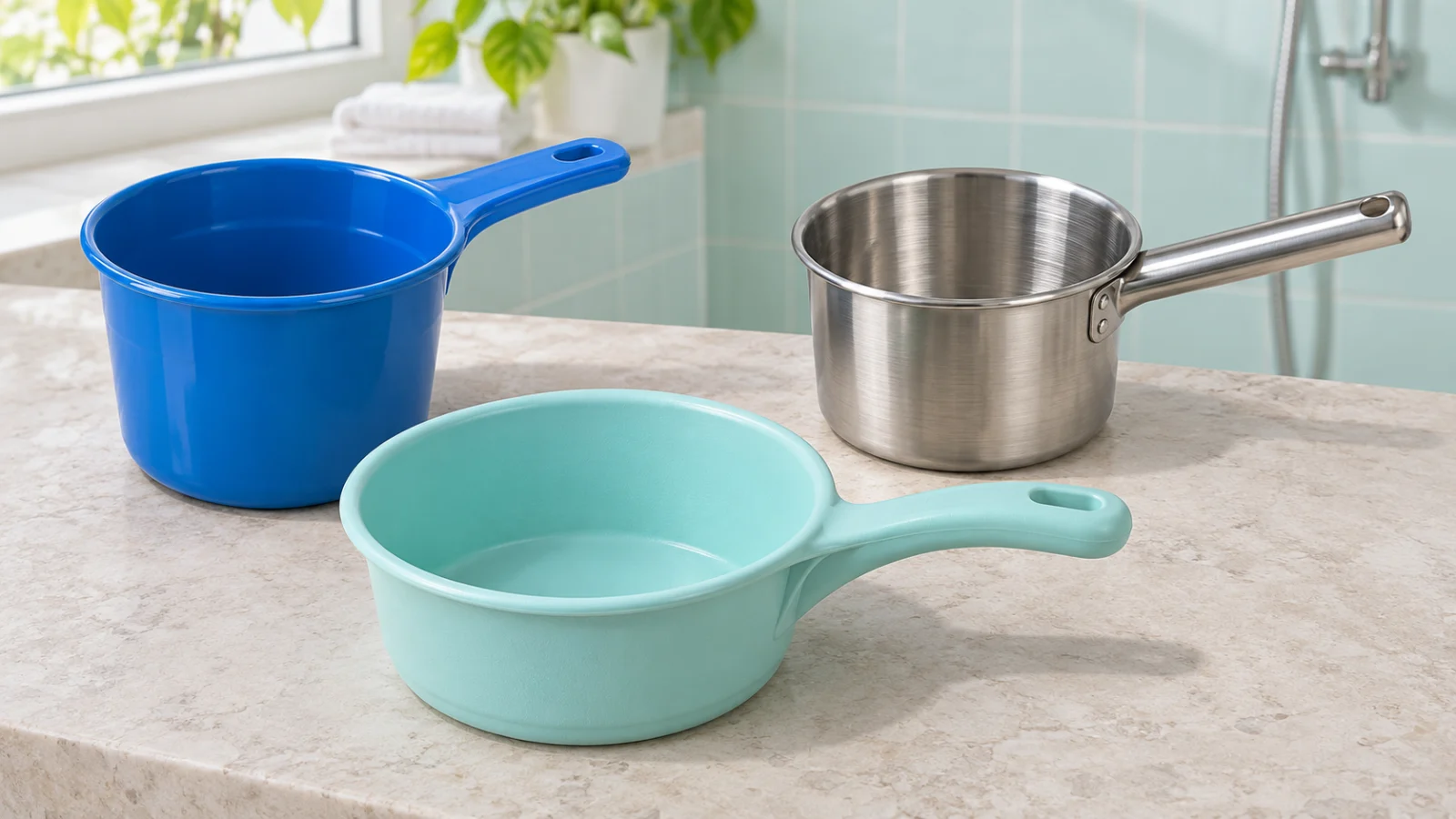
Material and design are different questions
When comparing a tabo, separate what it is made from from how it is shaped and assembled. Material information describes the substance used in the product. Design includes the capacity, handle position, rim, base, and overall outline. Both matter, but neither provides a complete picture on its own.
Two dippers described as plastic may differ in composition, dimensions, construction, and care requirements. Likewise, a thicker appearance does not by itself establish a higher load limit or better heat resistance. Check the information supplied for the individual item instead of treating a broad material description as a guarantee.
Begin with the packaging, label, or manufacturer’s product page. Look for a material description, intended use, and cleaning instructions. If a detail matters to your intended use but is not stated, ask the maker or seller before purchasing.
Reading information about plastic dippers
Plastic water dippers are available in many colours and shapes. Some products identify a particular plastic, while others give only a general description. Do not infer an exact material from colour, transparency, flexibility, or the way an item looks in a photograph.
A moulded symbol or abbreviation can provide information about the material, but it is not a complete instruction for use. It does not, by itself, establish whether the item is suitable for a dishwasher, boiling water, food contact, or a particular cleaner. Those uses require relevant product information.
Check whether the listed material applies to the entire product. A handle, decorative insert, coating, or other component may have different care requirements from the main container. Where a listing is unclear, request clarification rather than assuming that every part behaves the same way.
The practical question is whether the product is described as suitable for your intended routine and whether its condition supports continued use. A familiar material name does not remove the need to inspect edges, joins, and the handle.
Metal and other water dipper designs
Water dippers may also be offered in metal or other materials. Read the description carefully, including information about coatings, finishes, and attached handles. A polished surface alone does not establish the metal type or its suitability for every purpose.
Inspect accessible edges and connections. On a design with an attached handle, check whether the connection appears secure and whether any fasteners or joins show visible damage. Consider the weight of the empty item as well as the water it will carry.
Follow the maker’s instructions about temperature and cleaning. Do not assume that a handle remains comfortable to hold simply because it looks substantial. If the product information does not answer a question about your intended use, seek clarification before using it that way.
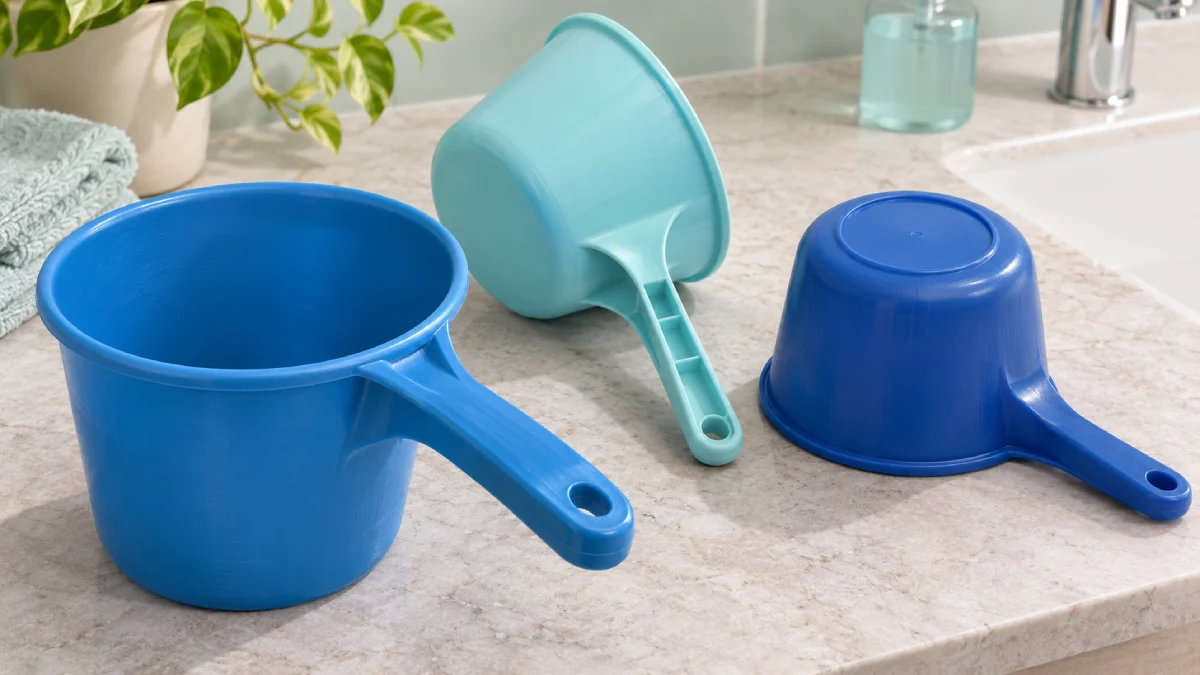
Inspect the rim, handle, body, and base
A basic visual inspection can identify damage that affects ordinary handling. It cannot establish a product’s chemical composition or certify its performance, but it can help you notice reasons to stop and ask a question.
- Rim and accessible edges
- Look for cracks, chips, sharp damage, or rough areas. Check the part used for pouring and any edge your fingers may touch during normal handling.
- Handle connection
- Inspect the area where the handle meets the container. Visible cracking, looseness, or separation deserves attention, even if the item still holds water.
- Container body
- Examine the inner and outer surfaces for leaks, splits, or changes that make the item difficult to clean. Do not rely only on the side shown in a product photograph.
- Base and resting position
- Check the bottom for damage and consider how the item will rest on the intended surface. A suitable storage position should not depend on balancing it precariously.
A one-piece construction still needs inspection. The absence of a separate fastener does not mean the handle or surrounding material cannot become damaged. Repeat these checks during regular cleaning.
Understand what a marking actually says
Product markings are most useful when interpreted in their stated context. A material abbreviation, capacity figure, manufacturer name, and care instruction answer different questions. Avoid treating one symbol as a substitute for all the information you need.
| Information | What to check |
|---|---|
| Material description | Does it identify the material clearly, and does it cover all relevant components? |
| Capacity | Is the volume stated clearly? Compare it with external dimensions and handling needs. |
| Temperature guidance | Are permitted conditions stated for this product? Do not infer them from appearance. |
| Cleaning instructions | Are suitable methods and any restrictions explained? |
| Environmental claims | What specific claim is made, and what information supports it? |
| Maker or supplier details | Is there a way to ask about unclear instructions or report a problem with the item? |
Match cleaning methods to the actual product
Before choosing a cleaner or cleaning method, read the instructions for the dipper and the cleaning product. Compatibility should not be guessed from the fact that two containers look similar. Finishes and components may need different treatment.
Avoid assuming that hot water, abrasive scrubbing, or a dishwasher cycle is suitable when the manufacturer has not said so. Using a more aggressive method does not automatically produce a better result and may leave damage that affects handling or future cleaning.
The cleaning and care guide explains how to organise a routine around washing, rinsing, drying, and inspection. Keep the product’s own instructions available so that routine decisions are based on the item you actually own.
Let condition guide replacement decisions
There is no universal replacement date that applies to every tabo. Condition, use, storage, and the manufacturer’s guidance all matter. Inspecting the item is more informative than assuming it is sound because it has not reached a particular age.
Take an item out of use if it leaks, has sharp damage, or no longer feels secure to lift. If a handle connection appears compromised, do not keep relying on it simply because the container body looks intact.
Ask the manufacturer or seller about an unexpected change in shape, finish, or condition. Do not attempt a repair that contradicts the supplied instructions. When replacing an item, check local disposal or collection requirements rather than assuming every material is accepted through the same route.
Put the information together before choosing
A useful comparison combines the material description, visible construction, handling needs, and care instructions. No single colour, marking, or design feature answers all of those questions.
If a listing leaves an important detail unclear, ask before purchasing. Once the item arrives, confirm that its condition and specifications match what you ordered. JLTABO provides general guidance; product instructions remain the reference for the individual item.