
Choose a tabo that fits your everyday routine
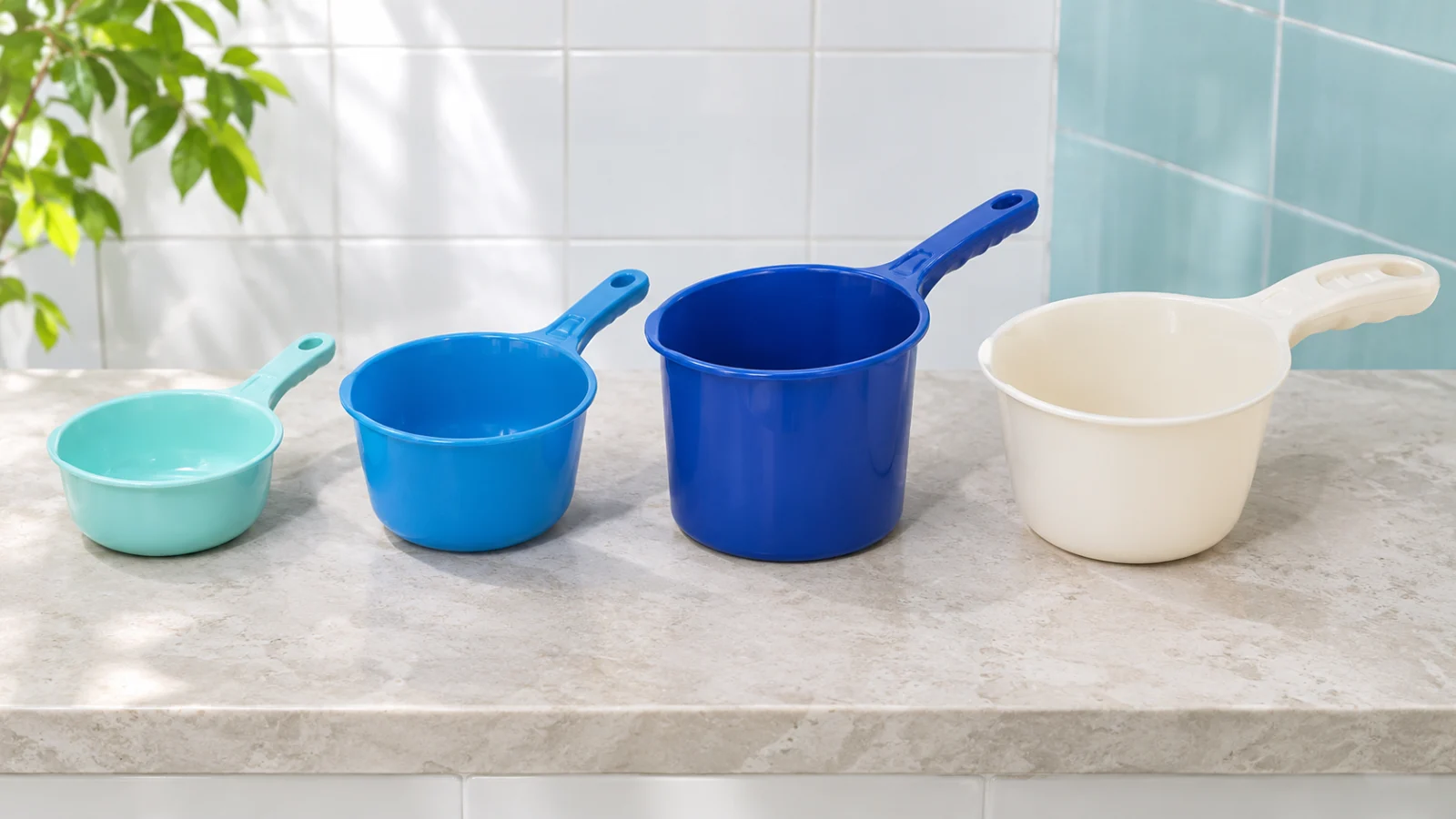
Compare capacity, handle shape, balance, construction, and storage before choosing a water dipper. A practical choice should suit the person using it and the space where it will be kept.
Start with the task and the person using it
Choosing a tabo begins with a few practical questions. What will it be used for? Who will lift it? Which bucket or water source will it be used with? Where will it rest between uses? Answering these questions gives you a more useful starting point than choosing by colour or advertised capacity alone.
Consider your current arrangement before replacing anything. If a dipper feels awkward, identify the reason. The handle may leave too little finger room, the filled container may be difficult to control, or its resting place may require an uncomfortable reach. A larger or more expensive model will not necessarily solve the actual problem.
In a shared bathroom, consider more than one user’s preferences. A design that feels light and easy for one person may be less manageable for someone else. Where possible, compare products in person and check the seller’s return conditions before purchasing.
Capacity matters because water adds weight
Capacity describes how much a container can hold, but it does not tell you how comfortable it will be to use. A larger tabo carries more water and becomes heavier when filled. The weight of the empty item also contributes to the amount you need to lift.
Compare the amount you normally need with the amount you can comfortably handle. Leaving space below the rim can make movement easier to control than filling right to the top. A smaller quantity may be more practical even when the container has room for more.
Check how a seller describes capacity. Photographs can make products look larger or smaller, especially when there is no familiar object beside them. Look for stated measurements and ask for clarification if capacity and external dimensions appear inconsistent.
No single capacity suits every household. Use the listed figure as one comparison point alongside grip, reach, balance, and the space available for storage.
Check the handle from more than one angle
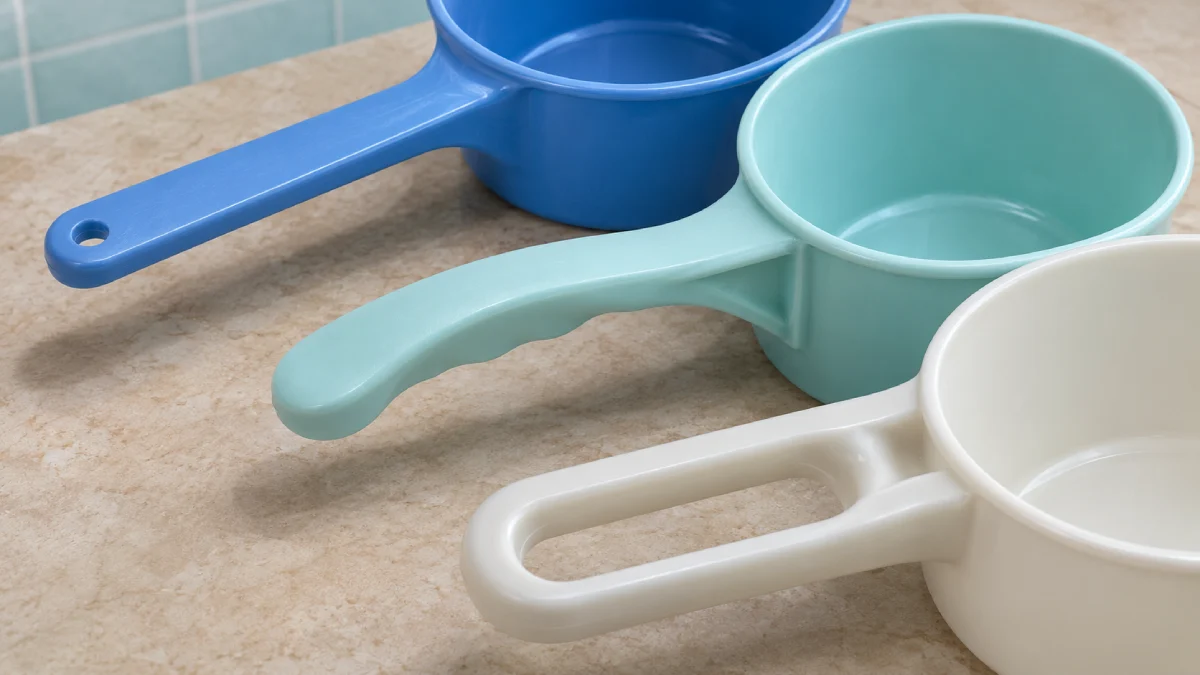
The handle is the part you interact with most directly. Its length, thickness, shape, and distance from the container body can affect how you hold and guide the tabo. A decorative design is less useful if it leaves insufficient room for your fingers.
When examining a product, look at both the grip and the area where it joins the body. Check for rough edges, visible cracks, unexpected movement, or a connection that appears damaged. A smooth photograph of the outside may not show the underside or the inner edge of the handle.
A longer handle can provide a different reach, but it can also project farther from the bucket or shelf. A shorter handle may fit a compact storage position while being less convenient in another setup. Compare the handle with the actual location where the tabo will be used.
Do not treat a textured grip or a particular handle shape as a guarantee against slipping. Handling depends on the person, the condition of the item, and the surrounding circumstances. Choose a design that feels manageable without relying on promotional claims alone.
Consider shape, balance, and pouring control
Two dippers with similar capacities may behave differently because their bodies are shaped differently. A wide opening, deeper bowl, or more extended handle changes how the item fits beside other essentials and how it feels when lifted.
Inspect the rim and any shaped pouring area. The edge should be intact and free from sharp damage. A spout may be convenient for a particular task, but it is not a requirement for every tabo. Consider whether the shape supports the way you intend to direct water.
Also check the intended resting position. If the item will stand on a shelf, its base and the available surface matter. If it will hang from a hook, check the product’s design and the hook’s stated limits. Do not assume that every handle opening is intended for hanging.
Measure the bucket and available space
A tabo should work with the container and layout you already have. Compare the width of its body with the bucket opening, and consider whether you can lift it without catching the handle on a wall, shelf, tap, or nearby fitting.
Think about changing water levels as well as a full bucket. Reaching into a deeper container may feel different when there is less water inside. Avoid an arrangement that encourages an awkward reach or requires moving obstacles each time the dipper is needed.
Keep walking routes and access to the bathroom door clear. The right storage position should also allow you to move containers and clean the surrounding area. A product that fits physically into a corner may still be inconvenient to retrieve or maintain.
For more layout considerations, explore storage and placement and the bathroom essentials guide.
Read material and care information
Check the product description for material details and instructions. Colour, thickness, and appearance do not establish every property of a material. A recycling mark, where present, should not be treated as a complete statement about suitable temperatures or cleaning methods.
If you intend to use warm water or a particular cleaning product, ask whether that use is supported by the manufacturer. Do not assume that a tabo can tolerate boiling water, a dishwasher cycle, or a strong cleaner unless the relevant instructions say so.
The materials and construction page explains how to approach these checks. Keep any supplied care information after purchase so you can refer to it when cleaning or inspecting the item.
A practical comparison checklist
Use the same questions for each product. This helps you compare relevant details instead of switching between unrelated features or relying on a single attractive photograph.
| Feature | What to check |
|---|---|
| Capacity | Is the listed capacity clear, and is the filled amount manageable for the intended user? |
| Handle | Is there comfortable finger room, with no visible damage or rough edges? |
| Dimensions | Will the body and handle fit the bucket, storage position, and available lifting space? |
| Construction | Are the rim, base, body, and handle connection intact? |
| Care instructions | Does the manufacturer explain appropriate cleaning methods and any relevant limits? |
| Seller information | Are the measurements, product description, and return conditions available? |
When comparing products online
Look for photographs showing the product from several angles, including the handle, inner surface, and base. Check whether a listing offers multiple sizes or colours, because the selected variation may differ from the main photograph.
Read descriptions carefully and ask the seller about missing measurements or care information. Customer comments may help you identify questions to investigate, but they do not replace the manufacturer’s instructions or establish a material certification.
Compare the total purchase cost and return conditions as well as the item price. JLTABO does not operate a checkout or recommend a particular seller on this page. The purpose of the guide is to help you evaluate the information supplied with a product.
Check the item when it arrives
Before putting a new tabo into regular use, confirm that its size and condition match what you ordered. Inspect the rim, handle, body, and base, and follow the supplied instructions for initial cleaning.
If you notice damage or an unexpected difference, contact the seller before attempting a repair or using the item. Keep the purchase details and any care instructions available. Once the tabo is in use, include condition checks in your normal cleaning routine.